
Table of Contents
For thousands of Pakistani students, studying in the United States is a dream come true. They want to study at world-class schools, gain exposure to the world, and access better opportunities for their careers. But applying for admission can be challenging if you’re not guided properly. At Sash Overseas Advisers, we assist students in every step of their admission and make it easier and stress-free.
From choosing universities to applying for a student visa, this guide on Thirteen Steps to Study in the U.S provides you with all the information you need.
Why choose the United States for higher education?
The United States has the best universities in the world, with outstanding academic programs, research facilities, and career opportunities. Students benefit from:
- Internationally recognized degrees
- Flexible study programs
- Research and internship experiences
- Diverse student communities
- Improved employment opportunities around the world
If you’re thinking of studying in the U.S., knowing these thirteen steps to study in the U.S can give you the confidence to prepare your educational journey.

These Thirteen steps to study in the U.S are discussed below
Step 1: Check your eligibility
The first step to Thirteen Steps to Study in the U.S is to check the minimum requirements before applying:
English Language Skills
Students typically require good English proficiency test scores for the following:
- TOEFL
- IELTS
- Duolingo English Test
Financial Resources
You will need to provide evidence that you are financially able to cover tuition fees and living expenses. This is in the form of bank statements or sponsorship documents.
Academic Qualifications
- For bachelor’s degrees: 12 years of education (intermediate, FA/FSc, and A-levels).
- For a master’s and PhD: 16 years of education.
Sash Overseas Advisers help students to assess their eligibility before applying.
Step 2: Shortlist Universities and Colleges
The next stage of the Thirteen Steps to Study in the U.S is choosing appropriate universities to attend, which should consider the following factors:
- Budget
- Program availability
- Location
- Scholarships
- Campus environment
- Career opportunities
Students should make a list of 3–5 universities that match their academic objectives.
Step 3: Research Your Selected Institutions
The third step to Thirteen Steps to Study in the U.S is to narrow down your list of universities; do more detailed research by checking out
- Course details
- Tuition fees
- Campus facilities
- International student support
- Graduation outcomes
This research will guide students in making sound decisions and avoiding pitfalls in the process.
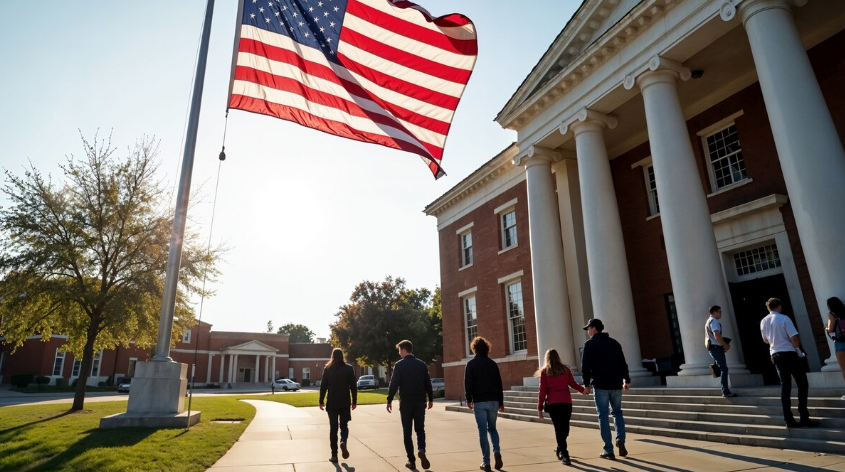
Step 4: Take Virtual Campus Tours
Numerous universities provide virtual campus tours these days. These tours introduce students to
- Classrooms
- Student housing
- Libraries
- Laboratories
- Facilities for sports & recreation
Virtual tours help students gain a better understanding of campus life before applying.
Part 5: Prepare for Required Admission Tests
Standardized tests are required by most universities in the United States. For some programs, you will require:
- TOEFL or IELTS
- SAT/ACT for college admissions
- GRE for graduate school
- GMAT for business schools
- USMLE for medicine paths
Earliest preparation increases the chances for admission and scholarships.
Step 6: Apply At Least Three Universities
Applying to multiple universities is one of the most critical steps of the Thirteen Steps to Study in the U.S.
Students should apply to:
- Dream universities
- Moderate-choice universities
- Safe-choice universities
This will increase the likelihood of getting acceptance letters.
Step 7: Complete Your Applications
The next step of Thirteen Steps to Study in the U.S is to fill out your applications.
Prepare the following documents:
- Academic transcripts
- Passport copy
- Personal statement
- Recommendation letters
- English proficiency scores
- Resume or CV
- Ensure correct and timely submissions of documents
At Sash Overseas Advisers, we help students to create professional applications that increase the chances of getting into college.

Step 8: Financial Aid & Scholarships
Studying in the US can be expensive, so students should look for the following scholarships:
- Merit scholarships
- Need-based financial aids
- Assistantships
- Tuition waivers
- Student loans
There are partial or full scholarships for international students at many universities.
Step 9: Explore Funding Sources
Funding could be provided by:
- Government scholarships
- Private organizations
- International foundations
- Educational institutions
- Sponsorships
Students should research scholarships locally and internationally.
Step 10: Submit Your Application
One of the important steps of the Thirteen Steps to Study in the U.S is to submit the application. Please note that before sending your application, you must do the following:
- Make copies
- Double-check application form
- Confirm deadlines
- Review essays and statements carefully
After submitting the application, students should check their email regularly.
Step 11: Decide on accommodation
The next step of the Thirteen Steps to Study in the U.S is to decide on accommodation. Students studying in the US can choose from the following:
On-Campus Housing
- Residence halls
- Shared dormitories
- Meal plans included
Off-Campus Housing
- Apartments
- Shared housing
- Furnished and unfurnished rooms
Each option has different cost and lifestyle benefits.
Step 12: Apply for a student visa
Apply for your student visa as soon as you get your admission offer and I-20 form.
- Typically, the visa procedure includes:
- Payment of the SEVIS fee
- Filling out the DS-160 form
- Appointing a visa interview date
- Preparing financial and academic documents
A successful visa interview is a crucial step in the Thirteen Steps to Study in the U.S.
Step 13: Attend a pre-departure orientation with your study abroad agency
The final step of the Thirteen Steps to Study in the U.S is to attend a pre-departure orientation. Students should attend a pre-departure orientation session before leaving for the United States, where they will learn about the following:
- American culture
- Academic systems
- Weather and lifestyle
- Travel preparation
- Student responsibilities
This student orientation assists students to settle well in a new environment.
Why Choose Sash Overseas Advisers?
Students will be assisted by Sash Overseas advisers in all stages of their admissions. Our qualified consultants help with:
- University selection
- Admission applications
- Scholarship guidance
- Visa assistance
- Interview preparation
- Pre-departure support
We are here to help you make your study in the US dreams easy and attainable.
Frequently Asked Questions
What are the basic requirements to study in the U.S.?
Students need academic transcripts, English language test scores, proof of finances, and a valid passport.
Which English test is accepted by U.S. universities?
TOEFL, IELTS, or Duolingo English test scores are accepted by most universities.
Can international students get scholarships in the U.S?
Yes, there are many merit- and need-based scholarships available for international students at many universities.
How long does it take for the student visa process in the U.S.?
The process varies, but students are encouraged to apply as early as possible after receiving the I-20 form.
How can Sash Overseas Advisers help the students?
Sash Overseas Advisers provides full support for admissions, scholarships, visa applications, and pre-departure preparation.